 ملتقى الألوان الفني ملتقى الألوان الفني
محمد علوش
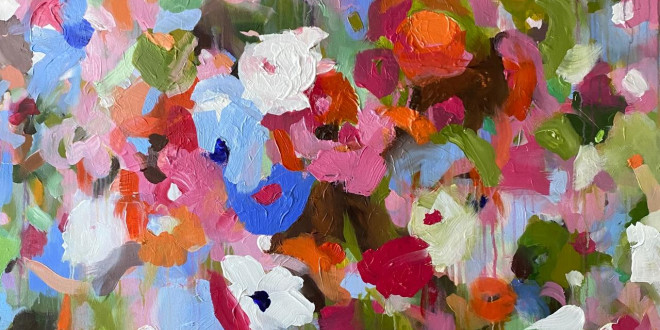
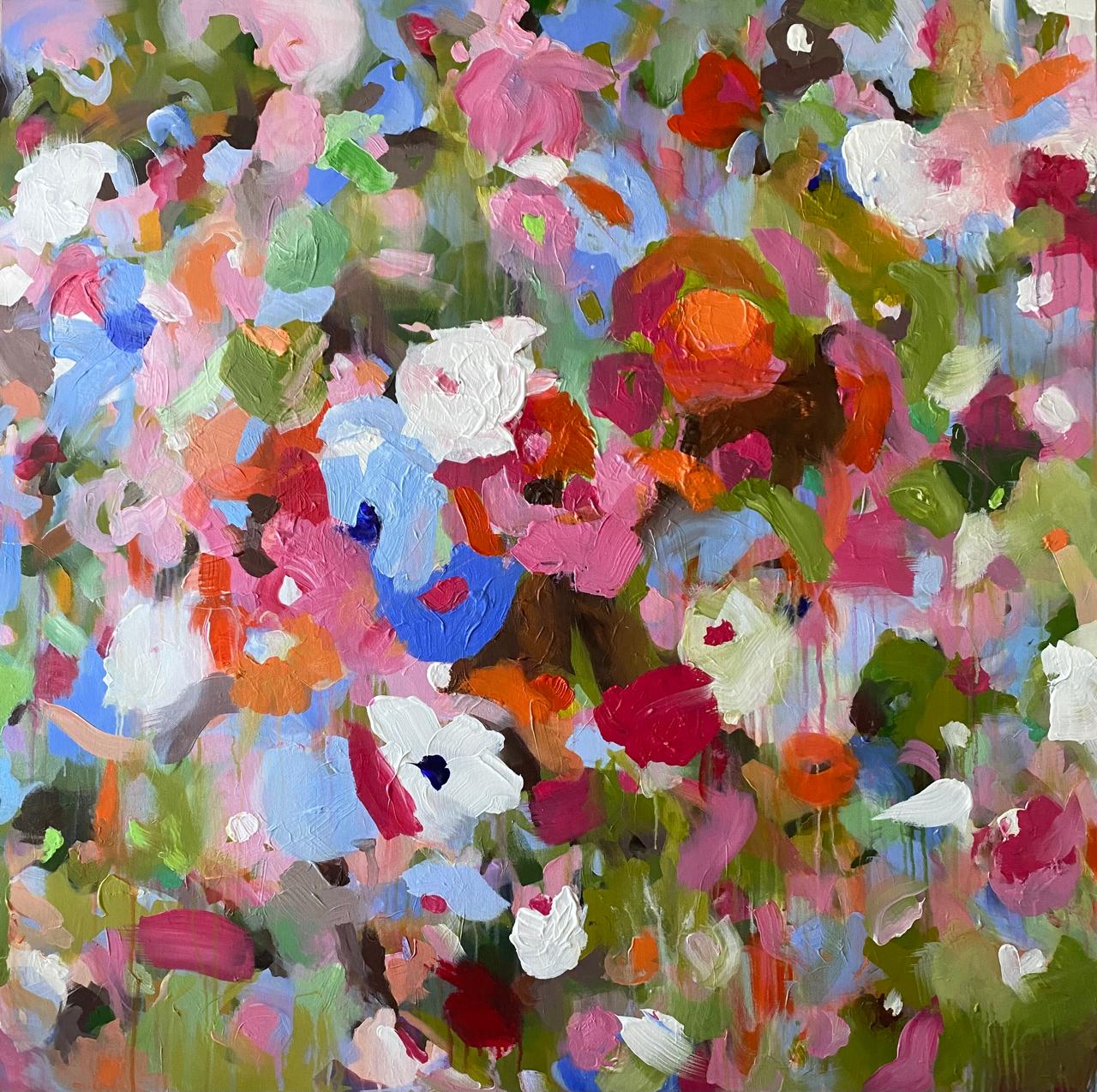
ترسم الفنانة التشكيلية كريستين نعمو الزهور وكأنها ترسم أثر الزهرة في الذاكرة والوجدان؛ ذلك الوميض الذي يبقى بعد انطفاء اللحظة. فاللوحة تفتح فضاءً داخليًا تتجاور فيه البهجة والاضطراب، الرقة والقوة، الضوء والظل.
يبرز منذ النظرة الأولى الفيض اللوني؛ فالوردي والأزرق والأخضر والأبيض والأحمر والبرتقالي تدخل في حوار حيوي، تتعانق فيه الألوان حينًا وتتواجه حينًا آخر، لتتحول اللوحة إلى ما يشبه موسيقى بصرية متعددة الأصوات.
وتمنح ضربات الفرشاة العمل طاقته الجسدية، فهي واضحة وحرة، لا تخفي حركة اليد، وكأن المتلقي يشاهد الزهرة وهي تولد من اللون. كما أن تداخل البتلات مع الخلفية وانتقال الألوان من مساحة إلى أخرى يجعل الفوضى الظاهرة محكومة بإيقاع داخلي من التكرار والتوازن.
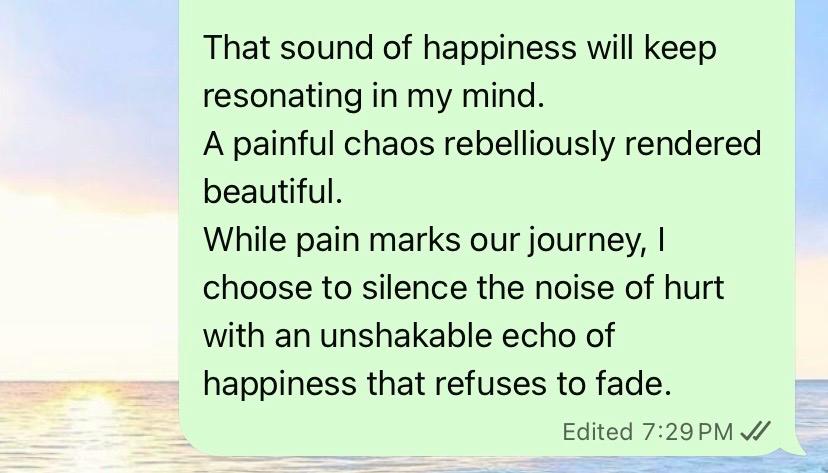
وتبدو عبارة نعمو: «فوضى موجعة أُعيد تشكيلها بجمالٍ متمرّد» مفتاحًا أساسيًا لقراءة العمل. فالجمال هنا لا يلغي الألم، وإنما يعيد صياغته وتحويله إلى طاقة لونية. وحتى السعادة التي تتحدث عنها الفنانة ليست سعادة ساكنة، بل سعادة تقاوم الوجع وتصرّ على البقاء.
أما الزهور البيضاء، فتظهر كومضات ضوء وسط كثافة اللون، فيما تمنح المساحات الداكنة هذا الضوء حضوره وقيمته. وهكذا لا يعود الأبيض مجرد لون، بل يصبح عنصرًا إيقاعيًا يفتح منافذ للعين داخل ازدحام المشهد.
في المحصلة، تقدم كريستين نعمو زهورًا لا تُقطف، لأنها تتجاوز شكلها الطبيعي لتصبح حالات شعورية؛ تنتقل من الطبيعة إلى الذاكرة، ومن الذاكرة إلى الوجدان، ومن الوجدان إلى اللون.
إنها لوحة تبدو كأنها احتفال بالحياة بعد الألم؛ احتفال لا ينكر الجرح، وإنما يحوّل أثره إلى جمال. وكأنها تقول باللون ما تقوله بالكلمات: يمكن للألم أن يمرّ من هنا، لكن السعادة هي التي ستترك أثرها الأخير.
A Critical Reading of Christine Nehmo’s Painting: A Polyphonic Visual Symphony
Mohamad Alloush
In this painting, Lebanese visual artist Christine Nehmo moves beyond the descriptive representation of flowers to explore their psychological and affective imprint upon memory and consciousness. The flower is no longer merely a botanical motif; it becomes a vehicle through which fleeting sensations, emotional residues, and states of inner experience are translated into pictorial language. What emerges is an interiorised space in which joy and disturbance, delicacy and force, light and shadow coexist in a state of continuous tension.
From the first encounter, the work is distinguished by its chromatic abundance and expressive intensity. Pink, blue, green, white, red, and orange do not operate as merely decorative components; they engage in a dynamic visual dialogue, alternately converging and colliding. Colour thus assumes an autonomous expressive function, contributing to a pictorial structure that may be understood as a polyphonic visual symphony, in which each chromatic register carries its own emotional resonance while participating in the larger harmony of the composition.
Equally significant is the material presence of the brushwork. Nehmo’s strokes remain visible, spontaneous, and gestural, retaining the physical trace of the artist’s hand rather than subordinating it to illusionistic representation. The viewer is consequently made aware not only of the depicted flower, but also of the act of painting itself. Form appears to emerge through the accumulation and interaction of colour, suggesting a process in which the flower is continuously constituted rather than simply represented.
The relationship between figure and ground further reinforces this expressive strategy. Petals appear to dissolve into the surrounding field, while chromatic passages migrate across compositional boundaries, generating a productive ambiguity between foreground and background. What might initially be perceived as visual disorder is therefore governed by an underlying structural rhythm, articulated through repetition, variation, chromatic counterpoint, and the equilibrium of pictorial masses.
Nehmo’s accompanying statement—“A painful chaos reshaped through rebellious beauty”—provides a particularly revealing conceptual entry point into the work. Beauty here does not function as an escape from suffering; rather, it becomes a means of reconfiguring and metabolising pain through colour. The pictorial surface absorbs emotional tension and converts it into visual energy. In this context, the artist’s notion of happiness is equally significant: it is not passive serenity, but an active and resistant form of happiness, one that asserts its persistence in the face of pain.
Within this chromatic density, the recurring presence of white flowers assumes a distinct compositional and symbolic role. They function as flashes of luminosity that punctuate the saturated surface, while the darker passages intensify their perceptual impact. White consequently operates beyond its conventional chromatic identity, becoming a rhythmic and spatial device that creates moments of visual suspension and allows the eye to navigate the complexity of the composition.
At the level of interpretation, Nehmo’s flowers resist literal categorisation. They are flowers that cannot be picked because they have ceased to be merely flowers; they have become emotional states. Their trajectory is one of transformation: from nature to memory, from memory to consciousness, and from consciousness into colour. The botanical image is thereby displaced from the realm of representation into that of affect.
Ultimately, the work can be read as a celebration of life in the aftermath of pain. Yet this celebration is neither naïve nor detached from suffering. On the contrary, its vitality derives precisely from the acknowledgement and transformation of the wound. The painting proposes colour as an act of resistance, and beauty as a form of emotional reconstruction.
In this sense, Nehmo’s work articulates through its pictorial language what she expresses verbally: pain may pass through the field of experience, but happiness is ultimately the force that leaves the final imprint.